
Die 4 Goue Reëls van Wapenveiligheid Wanneer dit kom by vuurwapens, is veiligheid nie opsioneel nie – dit is noodsaaklik. Of jy ’n ervare skut of ’n nuweling is, hierdie vier goue reëls van wapenveiligheid moet altyd gevolg word. Hulle is ontwerp om ongelukke te voorkom en almal in jou omgewing veilig te hou. Hier is die kernreëls, verduidelik in detail: 1. Behandel altyd ’n vuurwapen asof dit gelaai is Selfs al weet jy met sekerheid dat ’n vuurwapen leeg is, moet jy dit steeds hanteer asof dit gelaai is. Hierdie ingesteldheid dwing jou om altyd versigtig en bewus te wees. Waarom? Die meeste ongelukke gebeur wanneer mense glo dat die vuurwapen leeg is. Praktiese raad: Kontroleer self of die vuurwapen gelaai is en moedig ander aan om dieselfde te doen wanneer hulle die wapen hanteer. 2. Rig nooit die loop na iets wat jy nie wil tref nie ’n Vuurwapen moet nooit in die rigting van mense, troeteldiere, of enige ander ongewenste teikens gerig word nie. Hierdie reël bly van toepassing, ongeag of die wapen gelaai of leeg is. Waarom? As ’n ongeluk gebeur, kan jy tragiese gevolge voorkom deur seker te maak die loop wys in ’n veilige rigting. Praktiese raad: Rig die loop altyd na die grond of ’n veilige skietrigting, soos ’n skietbaan se teikenarea. 3. Hou jou vinger van die sneller af totdat jy gereed is om te skiet Plaas jou vinger langs die sneller, nie daarop nie, totdat jy jou teiken geïdentifiseer het en gereed is om te skiet. Waarom? Die sneller is sensitief, en ’n foutiewe beweging kan ’n skoot laat afgaan, selfs al bedoel jy dit nie. Praktiese raad: Oefen jou handposisie om seker te maak dat jou vinger altyd langs die sneller bly, nie daarop nie. 4. Wees bewus van jou teiken en wat agter dit is Wanneer jy skiet, moet jy presies weet wat jou teiken is, wat rondom dit is, en wat agter dit lê. Waarom? ’n Koeël kan deur ’n teiken beweeg of gemis word, en jy wil seker maak daar is niks agter die teiken wat beskadig kan word nie. Praktiese raad: Skiet altyd in ’n veilige area, soos ’n goed beheerde skietbaan, en vermy enige plek waar mense of eiendom in gevaar kan wees. Hoekom is Hierdie Reëls Belangrik? Hierdie reëls is eenvoudig, maar hulle red lewens. Hulle is nie net van toepassing op die skietbaan nie, maar in elke situasie waar ’n vuurwapen hanteer word – of dit nou tydens jag, selfverdediging, of sportskiet is. ’n Paar Bykomende Wenke Oefen gereeld: Om hierdie reëls in jou praktyk in te sluit, verg tyd en herhaling. Leer ander: Deel hierdie kennis met familie, vriende, en kollegas om veiligheid verder te bevorder. Gebruik veilige berging: Hou vuurwapens weg van onopgeleide persone, veral kinders. Samevatting Die vier goue reëls van wapenveiligheid is nie moeilik om te onthou of te volg nie, maar hulle is noodsaaklik om ongelukke te voorkom en die lewens van almal om jou te beskerm. Wapenveiligheid begin by jou – wees verantwoordelik, wees bewus, en respekteer die krag van vuurwapens. Onthou: Veiligheid eerste, altyd!

Inleiding tot Vuurwapens, Veiligheid, Patrone en Kalibers Die gebruik van vuurwapens is nie net ’n vaardigheid nie, maar ook ’n groot verantwoordelikheid wat kundigheid, dissipline en respek vereis. Of jy ’n beginner is of ’n ervare gebruiker, die belangrikste aspek van vuurwapens is veiligheid. Hierdie gids bied ’n oorsig van wat ’n vuurwapen is, hoe hulle werk, en hoe om hulle veilig en doeltreffend te gebruik. Wat is ‘n Vuurwapen? ’n Vuurwapen is ’n meganiese toestel wat ontwerp is om ’n projektiel (soos ’n koeël) met ontploffende krag na ’n teiken te stuur. Dit word gebruik vir verskeie doeleindes, soos selfverdediging, jag, sportskiet, en wetstoepassing. Tipes Vuurwapens Handwapens: Pistole: Semi-outomaties, lig en draagbaar, geskik vir selfverdediging en sportskiet. Rewolwers: Bekend vir hul eenvoud en betroubaarheid, met ’n draaiende silinder wat patrone hou. Geweere: Ideaal vir langafstandskiet en jag. Beskikbaar in verskeie kalibers vir spesifieke doeleindes. Haelgewere: Gebruik korrels of “slugs” as projektiele. Gewoonlik gebruik vir kortafstandjag, veral van voëls of kleiner wild. Outomatiese en Half-outomatiese Vuurwapens: Outomatiese wapens skiet herhaaldelik met een snellerdruk, terwyl half-outomatiese wapens ’n enkele skoot per snellerdruk skiet. Basiese Veiligheidsreëls Om vuurwapens veilig te gebruik, moet die volgende goue reëls altyd gevolg word: Behandel altyd ’n vuurwapen asof dit gelaai is. Selfs as jy seker is dit is leeg, hanteer dit met respek. Rig nooit die loop na iets wat jy nie wil tref nie. Dit sluit mense, troeteldiere en enige ongewenste teikens in. Hou jou vinger van die sneller af totdat jy gereed is om te skiet. Plaas jou vinger langs die sneller, nie daarop nie, totdat jy jou teiken geïdentifiseer het. Wees bewus van jou teiken en wat agter dit is. Jy moet weet waar jou koeël sal eindig as jy mis. Patrone en Kalibers Wat is ’n Patroon? ’n Patroon is die ammunisie wat deur ’n vuurwapen gebruik word. Dit bestaan uit vier hoofdele: Die dop: Hou die kruit, slagdoppie en projektiel bymekaar. Die koeël: Die projektiel wat geskiet word. Die kruit: Ontploffende materiaal wat die koeël aandryf. Die slagdoppie: Ontsteek die kruit wanneer dit deur die slagpen getref word. Kalibers Kaliber verwys na die deursnee van die loop en die koeël wat gebruik word. Dit word gemeet in duim (.22, .308) of millimeter (9mm, 7.62mm). Algemene Kalibers en Gebruik: .22 LR (Long Rifle): Klein kaliber, ideaal vir beginners, oefening, en kleinwildjag. 9mm: Gewild vir selfverdediging en sportskiet. .308 Winchester: ’n Veeldoelige kaliber vir jag en sport. .30-06 Springfield: Geskik vir grootwildjag. 6.5 Creedmoor: Gewild vir langafstandskote. 12-gauge: Mees algemene grootte vir haelgewere, geskik vir voëljag. Hoe Kies Jy die Regte Kaliber? Doelwit: Kies kleiner kalibers vir oefening en kleiner wild. Gebruik groter kalibers vir groter wild en langer afstande. Terrein: Langafstandskiet vereis kalibers soos 6.5 Creedmoor, terwyl digte bosse kalibers soos .308 bevoordeel. Terugslag: Kies ’n kaliber wat jy gemaklik kan hanteer – hoë terugslag kan akkuraatheid en selfvertroue beïnvloed. Versorging en Berging van Vuurwapens Om jou vuurwapen veilig en in werkende toestand te hou, is gereelde onderhoud en veilige berging noodsaaklik: Maak skoon: Verwyder residue van kruit en vuil na gebruik. Berg veilig: Hou vuurwapens in ’n geslote kluis of kas, buite bereik van kinders. Gebruik slotte: ’n Bykomende slot op die sneller of kamer verhoog veiligheid. Wetgewing en Verantwoordelikheid In Suid-Afrika en ander lande is daar streng wette oor vuurwapenbesit en -gebruik. Maak seker jy voldoen aan alle regulasies rakende lisensies, vervoer, en gebruik. Opleiding en Praktiese Gebruik Formele opleiding is belangrik om vaardigheid en selfvertroue op te bou. ’n Gesertifiseerde opleidingskursus leer jou die regte hantering, skiettegnieke, en veiligheidsprotokolle. Met die regte kennis en respek vir vuurwapens kan jy dit verantwoordelik en veilig gebruik vir jag, sportskiet, of selfverdediging. Onthou altyd: veiligheid eerste!

Beste Jaggewere vir 2025 Die beste jaggewere vir 2025 hang eintlik af van drie belangrike dinge: watter soort wild jy wil uitoorlê, hoe ver jy bereid is om jou oë toe te knyp en te sê “ek het hom!”, en natuurlik hoeveel geld jy oor het nadat jy al jou braaivleisgoed gekoop het. Hier is ’n paar gewilde opsies wat aanbeveel word vir jag – en ja, selfs vir daardie een bok wat altyd dink hy is slimmer as jy! 1. Bolt-Action Gewere Hierdie is die “Toyota Hilux” van jaggewere – betroubaar, duursaam en werk elke keer, maak nie saak hoe stowwerig die jagveld is nie. Tikka T3x Hierdie ou is soos daardie vriend wat altyd te vroeg opdaag vir braai, met alles reg – akkuraat, liggewig en maklik om te gebruik. Dis basies ‘n Skandinawiese supermodel in geweervorm. Gebruik: Vir alles van springbok tot koedoe. En ja, selfs as jy voel jy wil net wys hoe presies jy is. Remington 700 ‘n Klassieke opsie wat al langer bestaan as jou oupa se spenskas. Jy kan hom aanpas soos jy wil – langer loop, fancy scope, of selfs ’n kamoefleerpatroon om hom soos ‘n bos te laat lyk. Gebruik: Groot wild en om te spog met jou DIY-aanpassings. Ruger American Rifle Hierdie ou is soos die braaibroodjie van gewere: eenvoudig, lekker en doen sy werk sonder nonsens. Bekostigbaar en perfek vir beginners – of vir ouens wat nie elke keer wil huil oor krapmerke nie. Gebruik: Bokke wat dalk nie so vinnig hardloop nie. 2. Semi-Outomatiese Gewere Hierdie is vir die mense wat graag vinnig opvolgskote wil gee. Want kom ons wees eerlik – ons almal het al ’n bok gemis omdat hy besluit het om vinniger te hardloop as wat ons kan mik. Browning BAR Mark III Hierdie geweer is soos ‘n braaivleisvuur met regte hardekool – dit het krag en ‘n vloei wat jou laat voel soos ‘n pro. En ja, jy kan sê: “Ek het ‘n semi-auto, so jy weet ek bedoel besigheid.” Gebruik: Groot wild wat jy nié wil hê moet terugveg nie. Winchester SX4 Dit is die Ferrari van voëljag. Blink, vinnig, en amper te goed vir daardie arme eende. Pasop net – hierdie ou is so vinnig, jy mag dalk per ongeluk jou eie hoed skiet. Gebruik: Vir voëls wat dink hulle is slim genoeg om vinniger as jy te vlieg. 3. Kalibers en Gebruike Die keuse van kaliber is belangrik – jy wil nie hê jou skoot moet klink soos ’n vuurhoutjie wat breek nie. Maar jy wil ook nie so hard skiet dat jy jou eie skouer moet opereer nie. .308 Winchester Die “swiss army knife” van kalibers. Dis presies wat jy wil hê as jy nie weet wat volgende gaan weghardloop nie. Gebruik: Van ‘n springbok tot iets groter wat nie sy rug wil draai nie. 6.5 Creedmoor Hierdie kaliber is vir ouens wat wil sê: “Ek skiet akkuraat oor 400 meter, want ek is nie lus om te loop tot by die bok nie.” Gebruik: Plat terrein en lui jagters. .30-06 Springfield Die ou staatmaker. Kragtig genoeg om ‘n buffel neer te lê, maar sal jou laat lyk soos ‘n cowboy wat nie kan wag om sy storie te vertel. Gebruik: Groot wild, groot stories en groot spoggeleenthede. 4. Bykomstighede ’n Geweer is net so goed soos sy gadgets. Hier is die essentials: Scopes (Teleskope): Moenie skiet en hoop nie – kry ’n goeie scope sodat jy kan sien wat jy doen. Leupold: Vir ouens wat hul oë ernstig opneem. Vortex: Goedkoop genoeg dat jy steeds vleis kan koop as jy niks skiet nie. Zeiss: Vir daardie oom wat sê: “Goeie toerusting maak altyd die verskil.” Stroppies: Maak seker jou geweer het ’n goeie bandjie – niks is meer ongemaklik as ’n geweer wat gly terwyl jy deur die bos jaag nie. 5. Raad en Wetgewing Onthou, jag is nie net om stories by die vuur te hê nie – daar is ook reëls. Lisensies: Moet nie jou geweer probeer wegsteek soos ’n bottel brandewyn tydens ’n skooltrippie nie. Kry jou lisensie. Veiligheid: Die belangrikste reël: moenie jou skoonma met ’n wildsvark verwar nie – al dra sy ook kamoefleer. Met hierdie humoristiese gids is jy gereed om 2025 se jagseisoen met styl en glimlagte aan te pak. Onthou net: die jag begin met die geweer, maar eindig met die braai! ????????

Essensiële Items in Jou Skiet Sak vir Gebruik op die Skietbaan Is jy ‘n gereelde besoeker van die skietbaan? Of dit nou vir pret of oefening is, die regte toerusting is noodsaaklik vir ‘n veilige en aangename ervaring. Hier is ‘n lys van belangrike items wat jy moet saamneem na jou volgende besoek aan die skietbaan: 1. Skietbaan-sak: ‘n Stewige skietbaan-sak is ontwerp vir diegene wat gereeld na die skietbaan gaan en ‘n maklike manier benodig om hul toerusting te vervoer, is ideaal om al jou toerusting na en van die skietbaan te dra. Soek na ‘n sak met verskeie vakke om jou items georganiseerd te hou. Hierdie sakke het gewoonlik spesiale vakke vir gewere, ammunisie, skietbrille en ander benodigdhede. Dit is belangrik om ‘n skietbaan sak te kies wat waterdig is en wat voldoende beskerming bied vir jou toerusting. Ons Stel Voor ECOEVO PRO SERIES RANGE BAG R1500 BERETTA TACTICAL RANGE BAG R3500 2. Oog- en Oorbeskerming: Beskerming vir jou oë en ore is van uiterste belang wanneer jy met vuurwapens skiet. Investeer in ‘n goeie paar skietbrille en oorbeskerming om jouself te beskerm teen potensiële skade. Een van die belangrikste aspekte van veiligheid op die skietbaan is om die regte beskermingsuitrusting te dra. Hier is ‘n paar redes waarom dit so belangrik is om oor beskerming te dra op die skietbaan: Beskerming teen gehoorbeskadiging: Skietgewere kan ‘n baie harde geluid veroorsaak wat skadelik vir jou gehoor kan wees. Deur oor gehoorbeskerming te dra, soos oorfone of oorpluisies, kan jy jouself beskerm teen gehoorbeskadiging en gehoorverlies voorkom. Beskerming teen oogbeserings: Skietbaanongelukke kan gebeur en ‘n oogbesering kan ernstige gevolge hê. Dra altyd ‘n veiligheidsbril om jou oë te beskerm teen rondvlieënde skietbaanafval en om jou oë te beskerm teen skadelike ligstrale. Onthou altyd dat veiligheid op die skietbaan nie ‘n opsionele ekstra is nie, maar ‘n noodsaaklike vereiste vir diegene wat hierdie aktiwiteit geniet. Deur die regte beskermingsuitrusting te dra, kan jy jouself beskerm teen potensiële risiko’s en ‘n veilige en aangename skietervaring hê. Veiligheid kom altyd eerste! Ons Stel Voor CALDWELL PASSIVE LOW PRO EARMUFF GREY 24NRR (R535) VENTURE GEAR EARMUFF VG80 LP PASSIVE (R775) ALLEN EARMUFF LOW PROFILE – 26Db BLACK R595 EVOLUTION EYEWEAR CONNECT X YELLOW R470 Evolution Eyewear Connect X (Clear) R545 3. Teikens: As jy ‘n skuts is, weet jy dat die keuse van die regte teiken jou skietvaardighede kan beïnvloed. As die persoon wat die teikens opstel, kan jy kies uit ‘n verskeidenheid materiaalsoorte om die skietbaan op te stel, en elke materiaal het sy eie voordele en nadele. Een van die mees algemene materiaal wat gebruik word vir teikens op die skietbaan is papier. Papier teikens is beskikbaar in ‘n verskeidenheid groottes en patrone, van klein sente tot groot silhoeëtte. Een van die groot voordele van papier teikens is dat hulle eenvoudig is om op te stel, en die patrone wat daarop gedruk is, maak dit maklik om jou skietvaardighede te evalueer. Papier teikens is verbeter deur die gebruik van self-klevende doelwitte, wat die omvang van jou teiken en die punte wat jy raak, duideliker en akkurater maak. Staal teikens is ook ‘n algemene opsie op die skietbaan. Hierdie teikens word gewoonlik opgestel in die vorm van silhoeëtte, of hul kan soliede stukke metaal wees. Staal teikens is beskikbaar in ‘n verskeidenheid groottes, van klein tot groot, en is baie lekker om af te skiet. Hulle gee jou ‘n duidelike stukkie terugvoer wanneer jy hulle raakskiet, en hulle het ‘n lang lewensduur, mits hulle korrek nagegaan word. Daar is ook ander opsies vir teikens op die skietbaan, soos selfdoelgeskietjie teikens, ballonne, en selfs reaktiewe teikens. Die keuse van die regte teikens vir jou skietbaanervaring speel ‘n baie groot rol in hoe jy presteer en hoe jy die dag geniet. Hulle bied ook ‘n stukkie terugvoer wanneer jy aan jou vaardighede werk. Gaan uit en probeer die verskeidenheid opsies en kyk wat jy die beste vind. Onthou om altyd veilig te skiet en om die skietbaanreglemente te gehoorsaam. Ons Stel Voor IDPA TARTGETS R30 4. Skoonmaakstel: As ‘n toegewyde skietliefhebber is dit van kardinale belang om jou geweer en skiettoerusting in tip-top kondisie te hou. Om dit te bereik, is dit noodsaaklik om die regte skoonmaakstelle byderhand te hê wanneer jy na die skietbaan gaan. Hier is ‘n oorsig van die verskillende skoonmaakstelle wat elke skietliefhebber in hul skietsak moet hê: 1. Geweerskoonmaakstel: ‘n Geweerskoonmaakstel is ‘n noodsaaklike item vir die instandhouding van jou geweer. Dit sluit gereedskap in soos ‘n geweerborstel, geweerdoek, loopreiniger, geweerolie en ‘n geweerontvetter. Hierdie stelle is spesifiek ontwerp vir die skoonmaak van gewere en kan help om jou geweer in optimale werkende toestand te hou. 2. Algemene skoonmaakstel: ‘n Algemene skoonmaakstel kan ‘n verskeidenheid skoonmaakgereedskap insluit wat nuttig kan wees vir die algemene instandhouding van jou skiettoerusting. Dit kan items soos ‘n mikroskoonmaakstel, skroewedraaier, tang en skoonmaakdoek insluit. Hierdie stelle is handig vir die hantering van klein skoonmaaktake en kan jou help om jou toerusting in goeie toestand te hou. Deur die regte skoonmaakstelle in jou skietsak te hê, kan jy verseker dat jou geweer en skiettoerusting goed versorg word en gereed is vir gebruik wanneer jy dit nodig het. Onthou om jou skoonmaakstelle gereeld te gebruik en te verseker dat hulle in goeie toestand is om optimale resultate te behaal. Met die regte skoonmaakstelle byderhand kan jy jou skietervaring verbeter en jou toerusting in top kondisie hou. Ons Stel Voor REAL AVID GUN BOSS PRO UNIVERSAL CLEANING KIT R1050 5. Eerstehulp-sak: Veiligheid moet altyd ‘n prioriteit wees by die hantering van vuurwapens. Hou ‘n basiese eerstehulp-sak byderhand vir enige klein beserings. Ons Stel Voor IFAK BAG – TACTICAL MEDICAL BAG R315 IFAK BASIC (INDIVIDUAL FIRST AID KIT) REFILL R750 6. Bykomstighede: Stapelgeweer Sproeiverf Seelband Maatband Multi Gereedskap Pen, Merker, Papier Sonbrand Room Insekdoder Onthou, veiligheid is van uiterste belang wanneer jy met vuurwapens werk. Volg altyd die reëls en riglyne van die skietbaan en moenie op veiligheidstoerusting bespaar nie. Met die regte toerusting en ingesteldheid,

Best Red Dots for 2023 Red dots have come a long way. Now you can have a dependable red dot that runs 50,000 hours Best Budget Red Dots (L to R, Primary Arms, Holosun, Vortex Sparc) We will cover three of the most popular budget red dots and rank them in reliability, clarity, mounting options, bang-for-the-buck-ness, and more. Get ready for some torture testing too! Red Dot Immersion Models we’ll cover: Red Dot Warranty Holosun HS403A 3 year, non-transferable Vortex Sparc AR Lifetime, transferable WHY RED DOTS ARE AWESOME I’m an advocate for learning how to shoot with irons and then upgrading to red dots. If only to understand how awesome they are compared to old school fixed sights. Looking for other kinds of sights? We cover them in our Ultimate AR-15 Optics Guide. There are four main reasons why I love red dots. 1. Unlimited Eye Relief Unlike other sights, unmagnified red dots have unlimited eye relief…which means there’s no set minimum/maximum distance you need to mount them from your eye. 2. Parallax Free Red dots are essentially parallax free…this means when you move your head around, the red dot moves with you so you’re still pointed at the same target. This way you don’t need a super precise position to get the shot. 3. Co-witness Co-Witness, Absolute vs Lower Third You can also choose the height of your red dot so you co-witness your irons. This way in case the red dots go down…you still have your irons. Absolute co-witness places the dot exactly on your irons while lower 1/3 gives you more room for the dot. 4. Keeping Both Eyes Open Red dots are designed for you to keep both eyes open. It’s much easier with red dots compared to iron sights and by using both eyes you get a nearly unlimited field of view while still superimposing the dot on your targets. Now enough about red dots…let’s see our test subjects! THE CONTESTANTS Budget Red Dots Side There’s going to be some red dot terms that aren’t self-explanatory, here’s a quick breakdown of what they mean: Dot Size (MOA): means minute of angle and describes the dot’s size. For example, a 2 MOA dot will cover 2 inches at 100 yards. Night Vision Compatible: you will still be able to see the dot while using night vision equipment Here’s what I chose for what I see as the three most popular red dots under $200 that come from well-known companies. Primary Arms Advanced Micro Dot The PA Advanced Micro Dot is very well known in the budget optics space for being affordable yet reliable. Here are some of the important specs: 50,000 hour battery life (1x CR2032) 3-year warranty 2 MOA dot Waterproof to 2m for 72 hours Night vision compatible -4 F to 158 F working temperature Weight: 3.9 oz Does not come with riser (Using Daniel Defense Mount) Holosun HS403A The Holosun HS403A is making a splash in the red dot world for really affordable sights with all the bells and whistles. Rumor has it that Holosun is the manufacturer of Primary Arms’ red dots (to their specs). 50,000 hour battery life (1x CR2032) 2 MOA dot size 3-year warranty 8-hour auto shutoff Waterproof to 1m Night vision compatible Weight: 4.2 oz w/riser 14 F to 122 F working temperatures Comes with risers for absolute/one-third co-witness Vortex Sparc AR MOST ROBUST The Vortex Sparc AR is a newcomer from the very well-known Vortex that is robust with clear glass. 5,000 hours battery life (1x AAA) 2 MOA dot size Unlimited & transferable lifetime warranty 12-hour auto shutoff Waterproof to 1m Night vision compatible Weight: 8.5 oz w/ riser -4 F to 158 F working temperatures Comes with risers for both co-witness heights DROP TESTING I bought these myself to test them out so this part hurt a little…but if something can’t survive three drops from around 3 feet onto concrete (without being attached to a rifle)…then I probably wouldn’t trust it later anyway. All three survived but I found out later that the Primary Arms one had a crack on the rear window at 7 o’clock… Holosun and Primary Arms (Cracked) It didn’t affect function and it made it through the next test with flying colors. WATERPROOF & TEMPERATURE TESTING I don’t have plans of swimming with my guns but in case I get caught in the rain, I’d like for it to survive. I combined this test with the temperature test and loaded up a pot with some hot water. I let it cool overnight for the lower end of the temperature spectrum. Again, all three passed function testing in the morning. BUT… I made the error of not wiping them down. Some time passed before I went shooting with them and I found a good amount of rust on the Primary Arms (rails, next picture) and Sparc AR (screws of the riser). Vortex Sparc AR Rust BATTERY COMPARTMENTS & RISERS Budget Red Dot Batteries (L to R, Holosun, Vortex, Primary Arms) Here you can see the rust on the rails on the Primary Arms. And how each red dot deals with its batteries. The Sparc AR has the added benefit of using AAA batteries but weights almost 2x the weight of the others. The Primary Arms’ battery is on the side for easy access while the Holosun is underneath and requires disassembly from the mount. Holosun Mounting I was a little scared at the flimsy rubber housing but it held up during the water testing and there’s no rust on anything. Ok…how about how the dots and glass look? DOT & GLASS CLARITY Budget Red Dots All On (L to R, Holosun, Vortex, Primary Arms) This picture is meant to showcase the glass clarity. I focused on the body instead of the dots so the dots appear fuzzier than in real life. You can see that the Holosun and Primary Arms’ glass is greener than the middle Vortex. I’d say Holosun edges slightly over the Primary arms in terms of clarity. However, the view box of

How to Shoot a Gun – First Time at the Shooting Range Well, you bought your gun. You’ve done a bunch of dry fire practice and have a good handle on how your gun works. There’s only one thing left to do…off to the gun range Mindset Hold on there, you can’t just walk in and start bustin’ some proverbial “caps” into some paper targets. There are a few things you should know before you head over there. Your very first trip to a range can be a bit intimidating if not scary. I fully admit to having some cold sweats… Don’t hesitate to ask one of the employees any questions you might have. Trust me, they’d rather answer a beginner’s question than have to worry about the repercussions of a mistake. Whether you’re renting, accompanying someone, or bringing your own guns, here’s some information to make your trip to the shooting range a little more enjoyable. General Shooting Range Tips Every shooting range has their own set of rules, but here are some general tips. Listen to the Range Officer (RO). Follow the 4 Firearm Safety Rules: Bring eye and ear protection, get started with our Best Hearing Protection (2018). Sunglasses and prescription glasses are generally ok. Most will allow you to bring in your own ammunition for your own guns only. If you’re renting a gun, you’ll probably have to purchase the marked-up ammunition the range sells. Some ranges have additional restrictions such as no steel-core, tracer, or armor piercing ammo. These types of rounds can cause fire hazards or ruin targets. If you aren’t shooting, stand 1-2 yards behind the shooter. There will be a bright red/yellow line in front of the shooting table…do not cross it unless the RO says it is ok during a ceasefire. There might also be firing rate restrictions, such as no rapid fire or rapid fire that is limited to double-taps only. Most will also allow small children who can physically handle a firearm. Please keep an eye on your kids at all times! Pregnant women are advised not to go since there’s no hearing protection for the unborn. Check the range’s rules for spent brass casings. Some will not allow you to keep them since they collect and sell them. Costs can vary too. Some places charge one price for all day while others charge hourly. Phew, that’s a lot of tips…get ready for some more! Gun Rentals Some shooting ranges offer rentals of guns. However, there might be some age limits (18 for shotguns/rifles, and 21 for handguns). Or you have to be in a group to rent (to mitigate possible suicides). Renting is a great way to check out different styles and calibers. Even before you ever buy your first gun, see if any of your local ranges rent guns and go give it a shot. Keep in mind, these guns are usually maintained just enough to keep them working (if that). They are going to be a bit on the dirty and abused side. Still, it’s a cheap way to try some different guns out. If you aren’t 100% sure how the gun operates, ask an employee. On the range with live ammo is not the time to figure out how it works. You can start with our Beginner’s Guide to Guns. Curious Case of Gun Cases Don’t even think of going to the range if you don’t have a gun case. You don’t need some expensive hardshell case. The plastic case your gun came with is perfectly fine. Heck, a small cardboard box is fine. You just don’t want to walk in there openly carrying the gun in your hand. You will get yelled at…or arrested…or both. Also, and I’m going to type this slowly and in bold letters to make absolutely sure the point is made…do not, under any circumstances, carry a loaded gun into the range. Unload your gun, make sure it’s unloaded, double and triple check that it’s unloaded before you put it into the case before you leave your house. Gun ranges don’t mess around with this type of thing. Go With The Flow Here’s a high-level walk-through of what to expect from the moment you walk through the front door. Some things might be different depending on your range but this is essentially what is going to happen on your first trip: Make sure you have your gun unloaded and in its case before you go in. Go up to the counter, pay the range fee and buy some paper targets and ammo, if you need it. Just go with the cheapest stuff. You may also have to sign a liability waiver. Put on your ear and eye protection and then head into the range itself. Some places will walk you in and usher you to a bay. Other ones just hand you your receipt for the fees, point to the door and tell you “have a good time”. Set your stuff down on an empty bay. Go ahead and unpack your guns and mags and supplies. Keep your gun pointed downrange (“down range” means “towards the far side of the range where everyone is aiming and shooting their guns”). Somewhere, usually by the door, will be a big stack of cardboard sheets and a staple gun. Take one of your targets and staple it to one of those sheets. You only need one staple per corner. It’s ok to leave your stuff in your bay while you do this. Trust me, no one is going to mess with it. It’s amazing how polite and trustworthy people are when they’re in a small room where everyone is carrying multiple firearms. Most indoor ranges have electric target hanger…thingies. They are operated by a switch located inside your

Shooting Fundamentals Trigger Pull & Follow Through One of the most important fundamentals is the trigger pull. In a perfect world, you would have a rock solid grip and ignite the gunpowder by just thinking. But of course, we have to deal with mechanical inputs and human reactions. As a beginner shooter, you know there’s going to be a loud bang with some recoil. So you will likely press the trigger fast to get everything over with, which adds some movement to the gun and barrel. The bullet still takes some time to move down the barrel, and if the gun/barrel moves, your bullet will be off target. So the trick is to cause as little movement to the gun as possible when you are pressing the trigger. Use the middle of the first index finger pad Remove the initial slack or “pre-travel” in the trigger Slowly squeeze the trigger towards the back of the gun “Follow through” by not immediately letting go of the trigger “Reset” the trigger by easing it forward just enough to hear a *click* Slowly squeeze for the next shot Here’s a great short video tutorial. These tips can be used for almost all guns, not just pistols.

Shooting Fundamentals Shooting Stances & Grip: Isosceles vs Weaver vs Chapman Don’t laugh, but chances are if someone just gave you a gun, you would end up leaning back like this person. Having a proper shooting stance and grip gives you a strong foundation for all the other shooting fundamentals. But don’t worry, we’ll go over the most popular shooting stances, from Isosceles to Weaver to Chapman (aka modified Weaver), then cover how to have a proper handgun grip that gives you maximum control and recoil dampening. Isosceles Stance The isosceles stance gets its name from the arms and chest making an isosceles triangle. Kudos if you remember from geometry that isosceles means two sides are the same. Configuration of Isosceles Shooter faces the target squarely, feet are shoulder-width (or slightly wider) apart with toes pointed at the target. Arms are full extended with the gun in the middle of the chest. There’s a slight lean forward and some bending of the knees. Pros of Isosceles Stance Easier and more natural stance since you are merely “pointing” at the target. The body acts like a turret for easy movement to side targets. This stance is very popular in shooting competitions for easy transitions to different targets. Doesn’t really matter what eye dominance you are. If wearing body armor, you are getting more protection since you are square to the target. Cons of Isosceles Stance Potentially less stable if you are pushed forward / backward (pretty stable for side to side), but this is minimized by bending your knees and putting your weight a little more forward. If not wearing body armor, you are exposing a bigger target. Weaver Stance Developed in the 1950’s by LA County Sheriff Jack Weaver and since popularized by Jeff Cooper and his firearms school, Gunsite. The shooter is more at an angle to the target and the arms are bent. Configuration Non-dominant leg is forward of the dominant leg with a slight forward lean (“nose over toes”). Toes are pointed forward and the firing-side arm is extended while the supporting arm is bend. The shooter employs a “push-pull” grip by pushing with the firing arm and pulling back with the supporting arm. Pros of Weaver Stance Smaller profile to target (“blading” your body”) Better recoil management with the push-pull method More stable since the feet are now staggered. Natural stance if you need to balance yourself. Cons of Weaver Stance Harder to rotate to your non-dominant side since you feel like you’re binding yourself up. For example, the Gunsite instructor above would have a harder time rotating to his left. Harder for cross-dominant shooters (eg right hand dominant and left eye dominant) since the two are now no longer matched up. If in body armor, you expose your side which normally isn’t armored. Modified Weaver Stance (Chapman Stance) Pioneered by competitive shooter Ray Chapman. Very similar to the Weaver Stance except your shooting arm is fully locked out with the support arm bent downwards. Configuration Same as Weaver above except the shooting arm is fully extended, almost like a rifle stock. Some shooters will also create a cheek-weld on their upper arm. Pros of Chapman Stance All of the Weaver Stance Consistency of your arm “stock” and “cheek-weld” to be always the same, instead of hovering in the air with the Isosceles or Weaver. Better recoil management since the firing arm is fully extended Better for crossed-eye dominant shooters since by having a cheek-weld, the opposite eye is more in line with the firearm Cons of Chapman Stance All of the Weaver Stance minus cross-dominant shooting Might strain the neck muscles Verdict of the Best Stance Another of my standard answers…it depends on what you like best and your application. You can choose based on what comes more naturally to you, if you want to compete in shooting sports later, or if you have eye dominance issues. And in many cases, what your instructor prefers when you take a firearms class (you are going to take a class right?). For me, and Hickok45 below, we prefer the Chapman stance because of our crossed-eye dominance issues. I also like the feeling that my “rifle-stock” is always the same. And even though I do some competitive shooting, I don’t really see the moving side-to-side binding issue that much. But don’t take my word for it…try it out for yourself! And here’s a great video of Hickok45 showing you all the stances, since pictures can only do so much. Shooting Grip Don’t do the teacup grip! You’re going to start seeing it in a lot of movies and start groaning after you learn how to properly grip a handgun. We’ll cover modern handguns, revolvers, rifles, and shotguns individually in the next few lessons. But here are some overall tips on gripping a gun. Use a strong grip! You want to be able to control the recoil of the gun and having a strong grip also reduces the movement of the non-trigger fingers. Use your non-dominant hand to cover as much grip as possible.
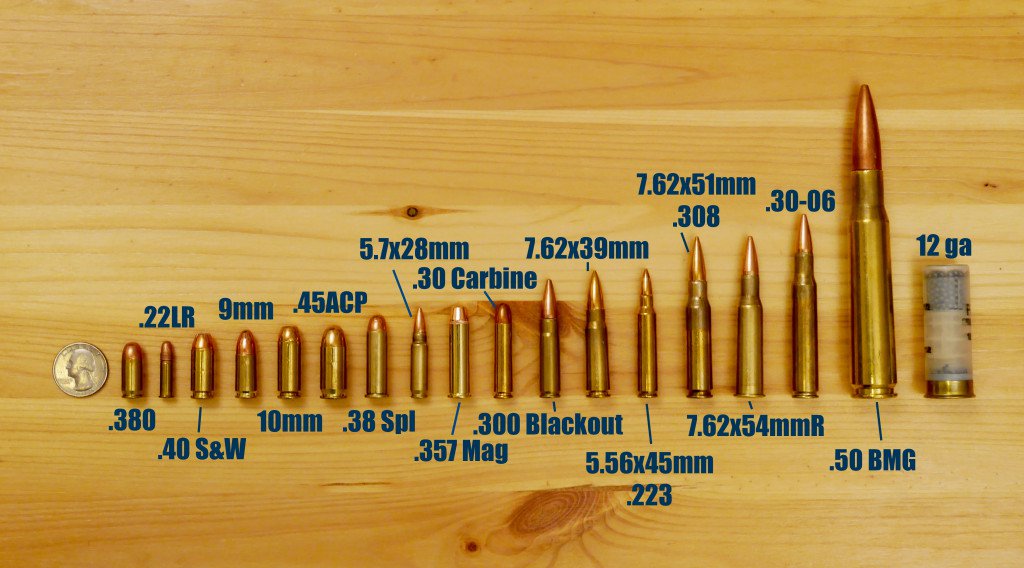
Introduction to Guns Bullets: Sizes, Calibres, and Types [Definitive Guide] One of the most daunting things when I first started looking for a gun was…what size bullet to get? We’ll be covering purely bullet size…and the benefits/weaknesses of each. Now, there’s A LOT of sizes out there but I want to cover the ones you’re most likely to see and/or use. These are the ones that you can walk into just about any sporting goods store and buy. Then we’ll follow up with some bullet terminology and the different types of bullet tips (hollow point, etc), how shotgun shell sizes work, and a breakdown of the components of a round. By the end, you’ll be a bullet pro! Bullet Size & Calibre First! For guns, “calibre” means the diameter of the barrel and thus the diameter of the bullet that is going through it. Also for terminology sake, “bullet” just means the metal projectile, while the entire thing is called a cartridge. We’re going to cover a lot in this article, including: Rimfire vs Centrefire Common Calibres Common Bullet Types Components of Cartridges Rimfire vs Centrefire The first differentiator is between rimfire and centrefire cartridges. The rimfire’s primer is built into the rim while the centrefire cartridge has the primer in the centre. Rimfires are extremely cheap (few cents each) and the .22LR is the most popular rimfire calibre. Common Bullet Calibres There’s A LOT of bullet calibres, but you might not run into more than a handful in your lifetime. We’ll be going over 18 calibres in total I have on hand, but let’s start with the top 11 most common sizes (in my opinion) first. Overview of More Common Bullet Calibres To make things a little more confusing, there’s a mixture of measurements in inches and millimetres. There’s also a unit of weight called a “grain” which is used to denote the weight of bullets. A “grain” is really small since 7000 grains make up one pound. When you talk about bullets at this high of a level, the most high-level trait is “Stopping Power”. This is a relatively vague trait and somewhat controversial. What it boils down to is how many bullets does it take to drop a person. Granted, if you hit someone in the right spot it only ever takes one but in most situations, you’re aiming for centre mass (a.k.a. the chest, a.k.a. the largest target available). Some bullets have enough power or other traits that will cause damage to organs even if you don’t hit them directly. You might also hear about a term called “Hydrostatic Shock” but that’s an entire article unto itself. Now let’s go through some! .22LR The “twenty-two” long-rifle is the most common calibre in terms of units sold. It has a bullet weight of around 30-40 grains and is extremely mild shooting in both pistols and rifles. The recoil is almost non-existent which makes it a great starter round for someone who has never shot a gun or is uncomfortable with the noise. The low price of the bullets is also great for learning sight pictures. It is traditionally the starting calibre for shooters. These things are only a few steps up from a pellet gun round. They can kill, don’t get me wrong, but they’re mostly for killing rats, snakes, and birds. They’ll kill an attacker for sure but it might take a shot or six. I have extremely fond memories of earning my Rifle Shooting merit badge with a .22LR. Many popular handguns and rifles have .22 versions or adapters that let you practice on the platform but use the inexpensive .22LR ammo. .25 ACP Slightly larger than the .22 and slightly more powerful….though not much. The ACP stands for “Automatic Colt Pistol.” There are quite a few guns that use this size but the ammo is more expensive and you’re not getting too much-added benefit other than the inherent reliability that comes with centrefire casings. Slightly more stopping power than the .22 but it’s kind of like the difference between stabbing someone with an ice pick or a knitting needle. Both do the job, but one will leave an ever so slightly larger hole. It’s a tiny round and I’ve yet to use a .25 calibre gun that didn’t work like crap. I’ve used a few flawless .22’s, however. I don’t know why that is. .380 ACP Now we’re getting into the beefy sizes. Personally, I would never use a gun with anything smaller than a .380 as my primary carry weapon. Sometimes called a “9mm Short”, it has seen a major boost in popularity recently thanks to the various “pocket pistols” that have come on the market. This is also a very controversial round. If you ever want to troll a gun forum, just go there and ask “which is better: a .380 or a 9mm?” or “Does a .380 have enough stopping power to use it as a carry?” Watch the arguments start. It’s entertaining. This bullet has relatively low recoil and, at close range, good penetration. They’re a great carry weapon size, in my noobish opinion. Gun author Massad Ayoob once said of the .380 “Some experts will say it’s barely adequate, and others will say it’s barely inadequate”. This is a low power round. Because of the nature of the bullet and the guns that shoot it, it’s going to be relatively useless beyond close-is range. 9mm This pistol round is officially known as the “9x19mm Parabellum” or “9mm Luger” to distinguish it from other 9mm rounds, but you will be fine just saying “nine millimetre” or “nine mil” for those in the know. My personal favourite and if there was a “Goldilocks” round, this would be it. The very first gun I bought

Introduction to Guns Part 2 4 Firearms Safety Rules Here at Pew Pew Tactical we want you to stay safe so we’re starting with the four primary gun safety rules. These rules come from Colonel Jeff Cooper, the father of the Modern Technique of handgun shooting. We’ll build on these rules as you become more familiar with firearms and their parts. 1. All guns are always loaded The purpose of this rule is to develop safe habits. Even if you are home and are absolutely sure your gun is unloaded, you may develop unsafe habits which creep into when you’re on the range with a loaded weapon. If you get used to swinging your gun around like the Terminator in your room, you might accidentally do it at the range. Always check yourself to see if a firearm is really unloaded before things such as handling or transportation. Even if someone says it is empty/clear, still check it yourself. 2. Never let the muzzle cover anything you are not willing to destroy The muzzle is the front of the gun where the bullet exits and the keyword here is destroy. Bullets will mess up physical objects but they will truly destroy human bodies. Google “gunshot wounds” if you dare. Even if you survive a GSW, you’ll probably be permanently disabled somehow. This rule also builds off of rule number 1. If the firearm can fire, assume it will fire, and make sure it goes off into a safe direction. This means no playful pointing at other people and also being careful of where the front of the gun “sweeps.” 3. Keep your fingers off the trigger until your sights are on the target Since a firearm is normally fired by pulling a trigger, this rule prevents accidental discharges from events such as being startled, stumbling, or muscle spasms. Even as you grip a gun but do not have the sights on target, keep your trigger finger out of the trigger guard area. An easy way to spot a disciplined shooter is how they properly index their trigger finger when they are not ready to shoot. 4. Be sure of your target and what is beyond it The first part is to positively identify your target. Then to realize that even if you are firing at the correct target, other targets may be hit. Besides at the range, you’ll need to consider this rule when choosing a home defensive weapon and ammunition combo since there are most likely family members or neighbors behind the walls and ceilings.
