
Beginner’s Guide to Guns
Introduction to Guns
How Guns Work
A super quick explanation of how guns work.
We’ll begin with the easy definition of what is a gun, different components of the bullet cartridge, some gun actions, and loading mechanisms.
What a Gun is
At its core, guns are things that launch projectiles of some sort at high speed. The first guns were just tubes with explosive and a projectile…think cannons.
Modern guns have come a long way.
Cartridges
What most people think of as “bullets” are actually “cartridges” that include the bullet, a casing, powder, and a primer. The primer is first ignited which causes a small explosion, which then burns the rest of the powder, creating lots of pressure that moves the bullet out of the gun. The bullet is just the projectile that shoots out of a gun, not the entire object.

Here you can see the expanded view of a typical rifle cartridge. Quarter for size.

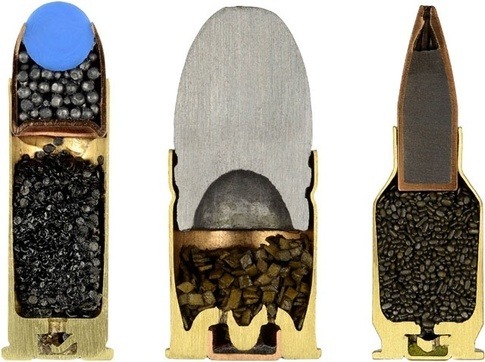
And here are cross-sections of a variety of pistol/rifle cartridges. Not to scale with each other.
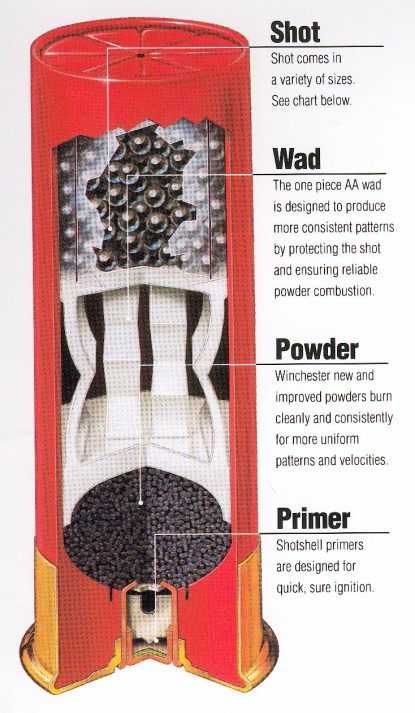
And one for a standard shotgun shell with birdshot.
Note the addition of the “wad” that encircles the shot. This is the plastic thing that you see fly out when you shoot a shotgun.
How Guns Work
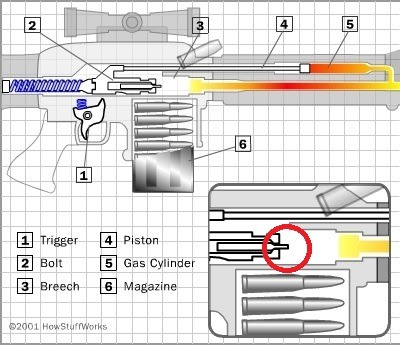
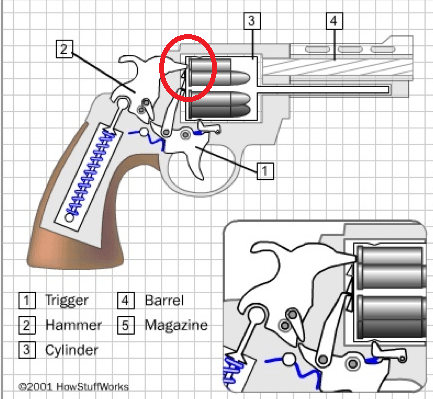
Different types of guns have different mechanisms of how to ignite the primer to burn the gunpowder, but there is almost always a rounded metal object called the “firing pin” which strikes the primer and starts the process.
Below you can see that the firing pin is attached to a “hammer” in a revolver.
While in a rifle it could be by itself and held in a “bolt.”
Loading Mechanisms
Most guns will have a mechanism that gets rid of the spent casing and moves in a fresh cartridge.
Some of these include manual actions, using the recoil from the explosion, or using expended gas from the explosion. We’ll go over these in detail in further lessons. But for now, here’s some slow-motion of guns in action.

Pew Pew Tactical